Dirty filter
The most common cause of weak airflow. Check it first.
Burners running, but no warm air coming out? Call Beaumont Furnace Fix. We'll test the furnace fan, inducer and airflow. One call. No forms.
Beaumont Furnace Fix is a locally owned and operated furnace repair company based in Beaumont, California, serving Beaumont and nearby towns. Call us for furnace repair, tune-ups and replacement.
Last updated October 15, 2026. Sources are linked on this page.
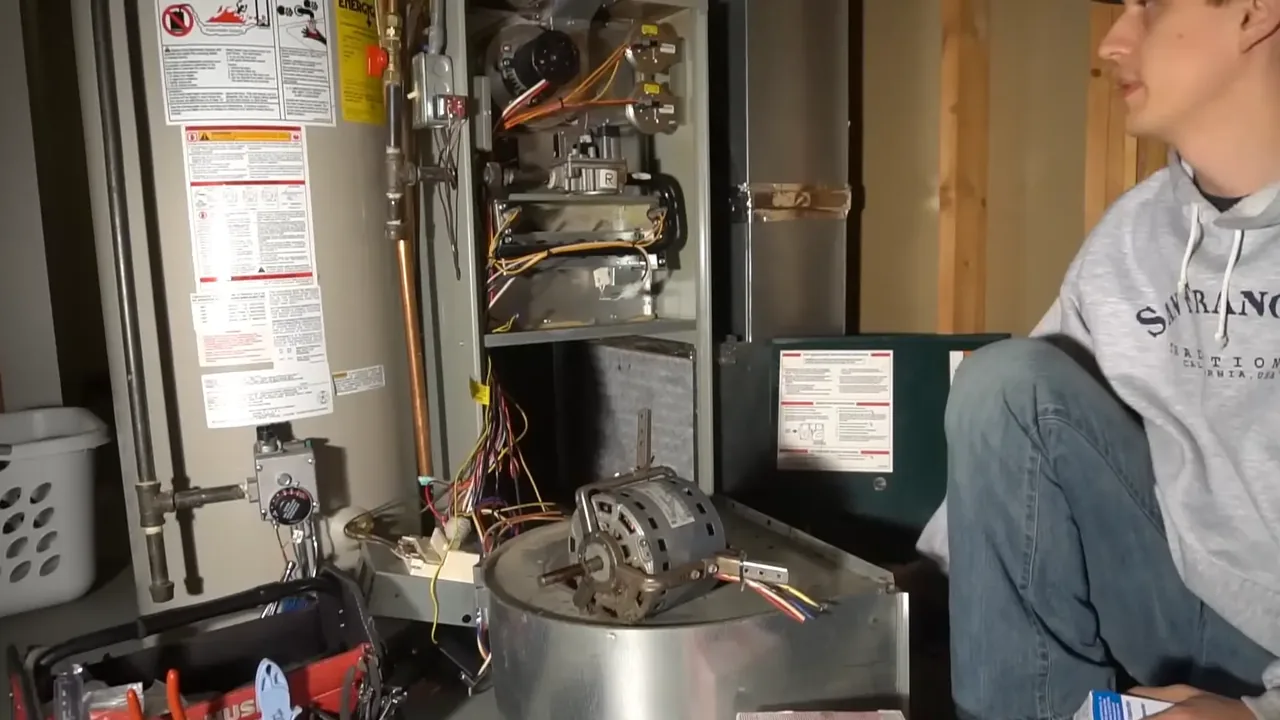
Most people only know about one. The big one is the blower motor.
It pushes warm air through your ductwork and out the vents. The small one is the inducer motor.
It pulls exhaust out through the vent pipe before the burners ever light. Knowing which fan is acting up makes furnace blower motor repair easier to explain on the phone.
When either one fails, the furnace stops making useful heat. But they fail in different ways, so it helps to know which is which.
You can often tell what's wrong just by listening. Stand near the furnace during one full start-up.
Note when the sound happens, then tell the pro. If the fan runs but the air isn't warm, read why a furnace blows cold air in Beaumont.
| What you hear | Likely cause | What to do |
|---|---|---|
| Humming, but the blower won't spin | Failed capacitor or seized blower motor | Turn it off, call |
| High squeal or screech | Worn bearings or an old belt | Call soon |
| Grinding or scraping | Failing motor bearings or a loose wheel | Turn it off, call |
| Rattling or clanking | Loose panel, wheel or inducer part | Call soon |
| Inducer whine that gets louder | Inducer bearings wearing out | Call soon |
| Loud boom at start-up | Delayed ignition, not a fan | Stop using it, call |
Burners light, but no air comes out? The blower may have failed, or a small part called a capacitor may be weak.
Without the blower, heat builds up inside the furnace. A safety switch called the limit switch then shuts the burners off. You may see the furnace light, run briefly and quit.
A furnace fan not working at all is often that capacitor or the motor itself.
Fan won't stop running? Check your thermostat first.
If the fan is set to ON instead of AUTO, it runs all the time on purpose. If it's on AUTO and still won't stop, a relay on the control board or a limit switch may be stuck.
Many two-story homes in Fairway Canyon and other newer neighborhoods have one furnace for both floors. Upstairs bedrooms often run colder.
Sometimes that's just design. But a sudden drop in airflow usually means something changed.
A furnace tune-up often includes a look at the blower wheel and filter.
The most common cause of weak airflow. Check it first.
Some motors have speed settings that may be set too low for heating.
Dust caked on the fan blades moves far less air.
Warm air escapes into the attic before reaching the room.
Closing too many vents raises pressure and strains the motor.
A motor that runs slow or hot is near the end.
The U.S. EPA says 20 to 30 percent of the air moving through a typical duct system is lost to leaks, holes and loose joints.
In two-story homes like many in Fairway Canyon and Tournament Hills, ducts often run through the attic. A loose joint there shows up fast as one cold bedroom.
Here's one most people never hear about. Before the burners light, a pressure switch checks that the inducer is pulling exhaust out properly.
In some homes, wind and venting conditions can contribute to pressure-switch shutdowns.
A qualified technician should inspect the vent cap, inducer, pressure switch, tubing and condensate drain before replacing parts. For more on dust and filters, read how Santa Ana winds affect your furnace.
In the San Gorgonio Pass, gusty nights are common from fall into winter. Does your furnace quit on windy nights, then work fine once it calms down?
Tell the pro, because a venting problem needs a different fix than a part swap.
A real fix may involve the vent, not just the pressure switch.
Fans and vents are part of the furnace's safety system. Leave these to a pro.
| Don't do this | Why |
|---|---|
| Disconnect the pressure-switch tubing | It's a safety control, and bypassing it can let the furnace run unsafely. |
| Change vent pipes or vent caps | Wrong parts can block exhaust or let carbon monoxide back in. |
| Force the blower to start | A stuck motor or bad capacitor can overheat or shock you. |
| Keep running a furnace that grinds, scrapes or smells like burning wires | Turn it off. Those are signs of a failing part or an electrical problem. |
Low airflow doesn't just leave rooms chilly. When the blower can't carry heat away, the inside of the furnace runs too hot.
The limit switch trips, the burners shut off, and the furnace restarts minutes later. That short cycling looks a lot like a dirty flame sensor or a failing ignitor, which is why guessing leads to the wrong part.
Ongoing overheating can put extra stress on furnace parts. A contractor should look at repeated high-limit trips and airflow problems before they lead to bigger repairs.
If your furnace is an older 80% AFUE model with a history of overheating, ask for a furnace inspection too.
Older furnaces usually have a PSC blower motor. It runs at set speeds and uses a capacitor to start.
Many newer furnaces have an ECM motor. It adjusts its speed, runs quieter and uses less electricity.
A weak capacitor can look like a dead motor, so ask whether the furnace capacitor was tested before a motor is replaced.
ECM motors last a long time, but when one fails, the electronic module is often the part that went. A pro can test whether the motor or the module failed.
On an older furnace near 15 to 20 years old, a failed blower motor is also a good moment to ask if repair still makes sense. Our furnace replacement guide can help.
| PSC motor (older) | ECM motor (newer) | |
|---|---|---|
| Found in | Most older furnaces | Many furnaces from the last 10 to 15 years |
| Speed | A few fixed speeds | Adjusts its own speed |
| Starts with | A capacitor | A built-in electronic module |
| Common failure | Weak capacitor or worn bearings | Failed module or a wiring fault |
| Sound | Louder, can hum or squeal | Quieter, ramps up slowly |
| Electricity use | Higher | Lower |
Fan and airflow problems can come from several places. A few details speed up the diagnosis.
Wind can be one factor in some shutdowns, but it isn't a diagnosis. Your technician needs to inspect the vent, inducer, pressure switch and safety controls.
The blower motor likely isn't running. A weak capacitor, a failed motor, a bad relay on the control board or a tripped limit switch are common causes.
Turn the furnace off at the thermostat so it doesn't overheat. Check the filter and the furnace door, then call a pro to test the capacitor and motor with a meter.
Check the thermostat first. If the fan is set to ON, it runs all the time on purpose.
Switch it to AUTO and wait a few minutes. If it still won't stop, a stuck relay on the control board or a limit switch may be holding it on. A pro can test both and tell you which one failed.
Often the blower motor trying to start but can't. A failed capacitor is the most common cause, and it's a small part.
A hum from the inducer can mean worn bearings instead. Turn the furnace off and call, since a stuck motor can overheat.
Tell the pro whether the hum starts before or after the burners light.
It pulls exhaust out of the furnace before the burners light. The small fan pushes fumes up the vent pipe.
If it fails or the vent is blocked, the pressure switch won't close and the furnace won't light. That's a safety feature to keep carbon monoxide out of your home. A whine or rattle often means worn bearings.
Yes. Gusts across the roof can push air back down the vent and trip the pressure switch.
The furnace stops until the wind drops, then works fine again. That pattern is common in the San Gorgonio Pass from fall into winter.
If it happens often, ask a pro to check the vent cap, the vent location and the pressure switch tubing.
On most furnaces under 15 years old, repair it. A new motor or capacitor usually makes sense when the rest of the furnace is sound.
On an older furnace with other problems, it's fair to ask whether replacement is smarter. Ask the pro to show you the failed part and explain both options before you decide anything.
Once a year, as part of a fall tune-up. A pro checks the capacitor, the motor's amp draw, the blower wheel and the airflow.
Dust caked on the wheel cuts airflow a lot, so cleaning it matters. Between visits, changing your filter is the best thing you can do, especially after a big Santa Ana wind.
Tell us what the furnace is doing. We'll take it from there.
(234) 567-8911Call now